

Gravity Water Filter Systems Compared: Berkey, BOROUX, Alexapure & Purewell
Gravity Water Filter Systems Compared: Berkey, BOROUX, Alexapure & Purewell
A side-by-side look at the leading countertop gravity systems—Berkey, BOROUX, Alexapure, ProOne, Doulton, Culligan, Waterdrop and Purewell—with capacity, cartridge and running-cost detail. For UK-specific buying criteria, see our UK gravity water filter guide.

A little more value with your Purewell.
Use code PURE15 for an extra 15% off your Purewell K Series system. All orders ship next business day directly from our U.S. warehouse.
Free shipping within the contiguous United States · 30-day return support · Secure checkout · 24/7 help center
Choose the filter.
Then choose the size.
A gravity system can make countertop water filtration simple, without a power connection. Start with the substances you want to reduce and evidence for the exact cartridge. Then compare capacity, counter clearance and the ongoing cost of replacements.
About this guide: Written by Purewell, a gravity filter brand. We compare published product information, not results from hands-on testing. Models are listed for comparison; placement does not establish an independent performance ranking.
How does a gravity water filter work?
You fill an upper chamber, water passes through the installed filter elements, and the lower chamber stores filtered water for dispensing. Gravity provides the driving force, so a manual system needs no pump or connection to household plumbing.
Add suitable source water to the upper chamber.
Water moves through the installed elements.
Use the tap to draw from the lower chamber.
The housing tells you how much water you can store. The filter determines the treatment capability. Two similar-looking stainless steel systems may have different cartridges, performance evidence and maintenance requirements.
Gravity water filter systems to compare
Compare specific models—not broad assumptions about an entire brand.
Waterdrop and Culligan both offer gravity countertop systems. The table below keeps those models in the same category as Purewell, Berkey and other gravity options. Follow each official listing for the current configuration, price and availability.
| Model | Listed capacity | What to check | Official listing |
|---|---|---|---|
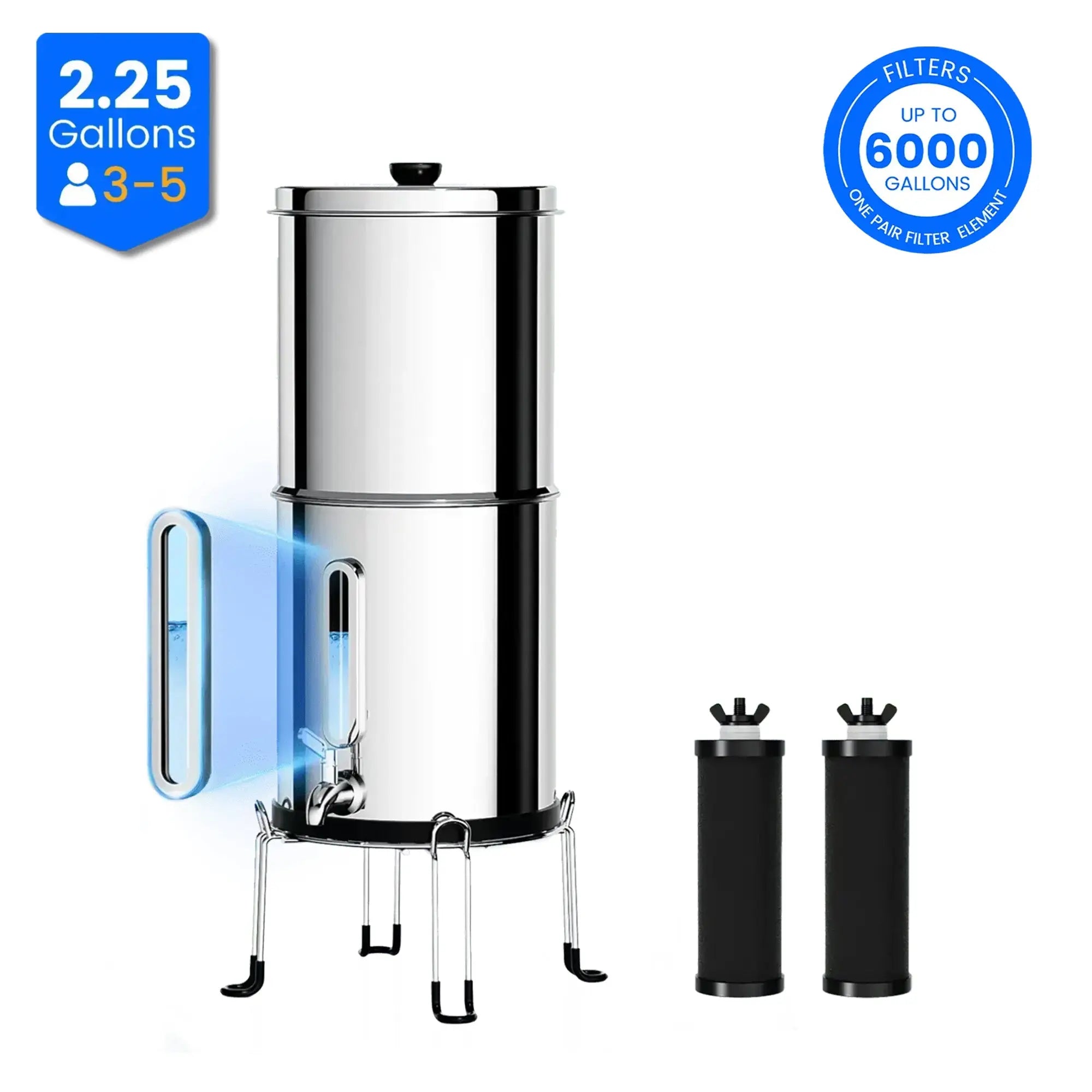
| Purewell K Series | 2.25 gal | K Series carbon filters; choose the exact filter option. | View model ↗ |
| Big Berkey | 2.25 gal | Check the included elements and current replacement availability. | View model ↗ |
| BOROUX Legacy | 3 gal | Compare the Foundation filter configuration and replacement cost. | View model ↗ |
| ProOne Big+ | See listing | G3.0 configurations vary. The official page currently marks this model as being discontinued. | View model ↗ |
| Alexapure Pro | 2.25 gal | One gravity block filter is listed in the kit. Read the test-data capacity limits. | View model ↗ |
| Waterdrop King Tank | 2.25 gal | The linked configuration is sold without a stand. | View model ↗ |
| British Berkefeld | 8.5 L option | Match the housing size and Ultra Sterasyl filter configuration. | View model ↗ |
| Culligan Scout | 2.25 gal | Compare the included MaxClear filters and replacement schedule. | View model ↗ |
Official product pages reviewed September 10, 2026. Capacities are manufacturer-listed system or storage capacities, not filter service life. Configurations and availability can change. ProOne’s current listing contains a discontinuation notice.
Use the same checklist for every brand
- Performance: Look for the exact cartridge name, tested substances, rated capacity and test conditions. A standard number alone does not explain every reduction claim.
- Ownership cost: Compare the complete system, required accessories, replacement quantity and replacement price—not only the starting price.
- Everyday use: Check assembled height, tap clearance, refill access and how easily you can obtain matching filters.
Which Purewell capacity fits your day?
Start with how much filtered water you use for drinking and cooking between refills. Purewell’s listed household ranges are a starting point; your refill routine and countertop space matter just as much.
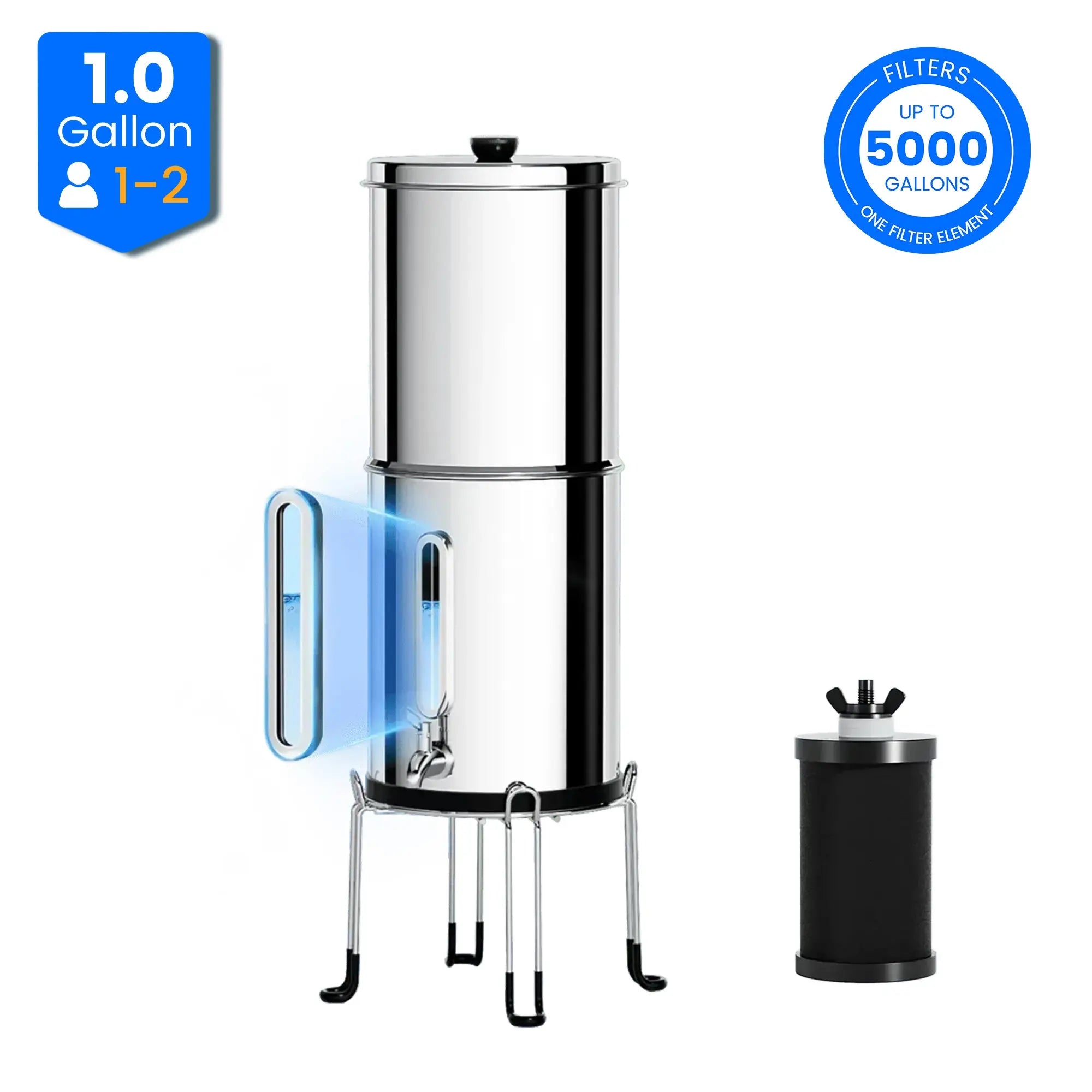
1.0 US gal
≈ 3.8 liters
Listed for 1–2 people
One filter · check cabinet clearance
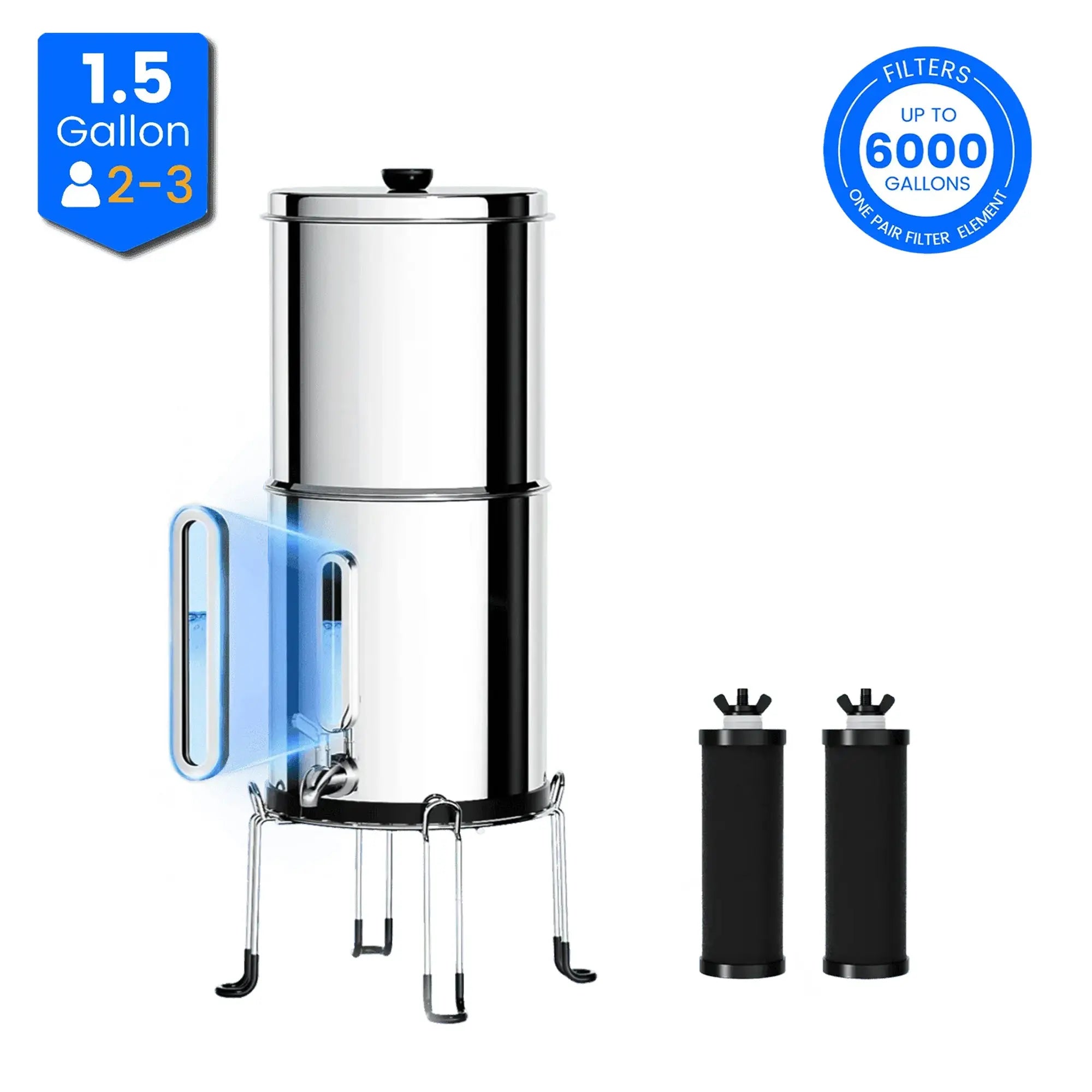
Explore 1.0 gallon →1.5 US gal
≈ 5.7 liters
Listed for 2–3 people
Two filters · Ø19 × 57.5 cm with stand
Explore 1.5 gallon →2.25 US gal
≈ 8.5 liters
Listed for 3–5 people
Two filters · Ø22 × 66 cm with stand
Explore 2.25 gallon →Bars compare listed water capacity, not physical product dimensions. Liter values are rounded conversions of US gallons. Height figures above include the stand; leave additional room to lift the lid and refill. Exact 1.0-gallon dimensions are not stated in the current description.
The cartridge matters more than the shell
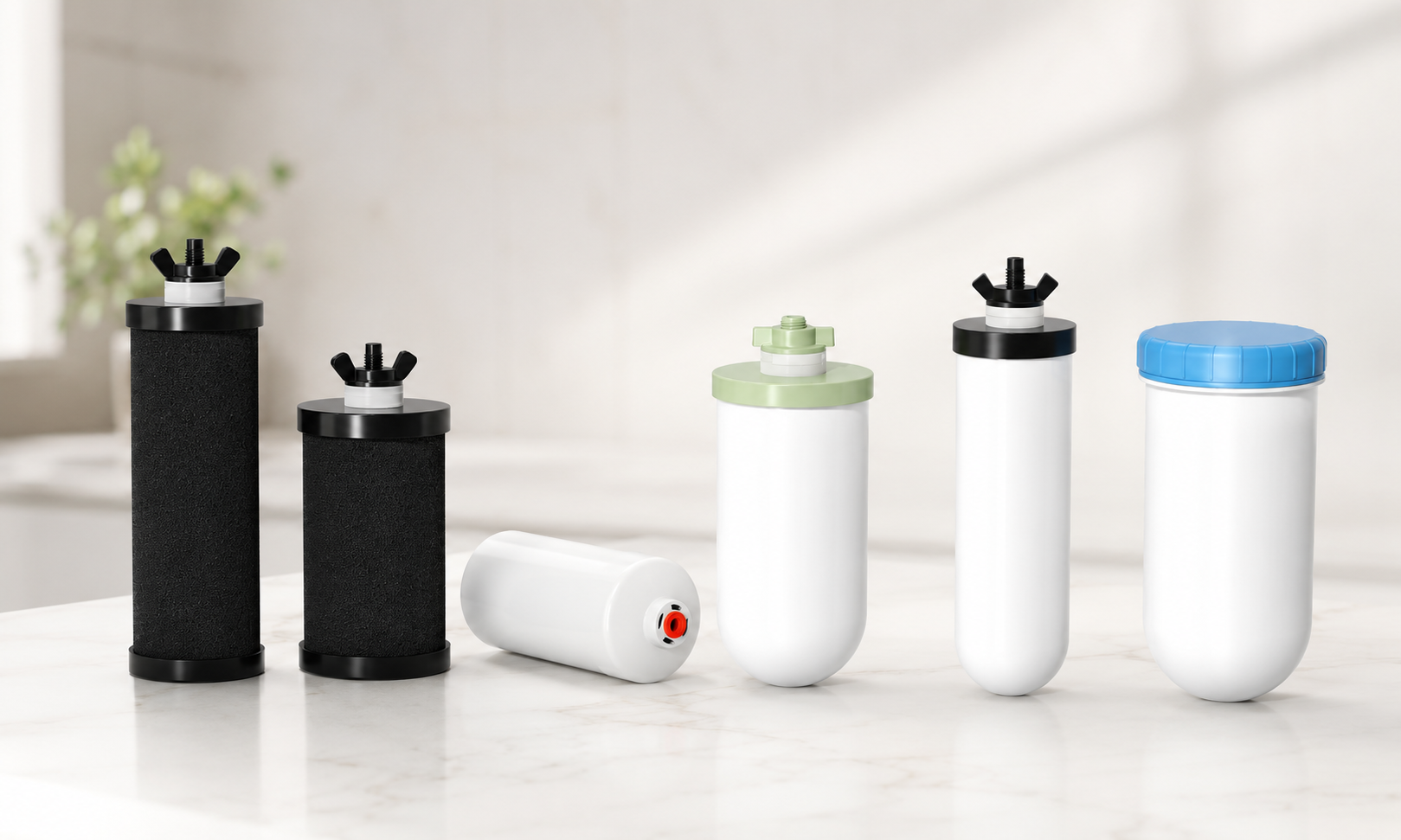
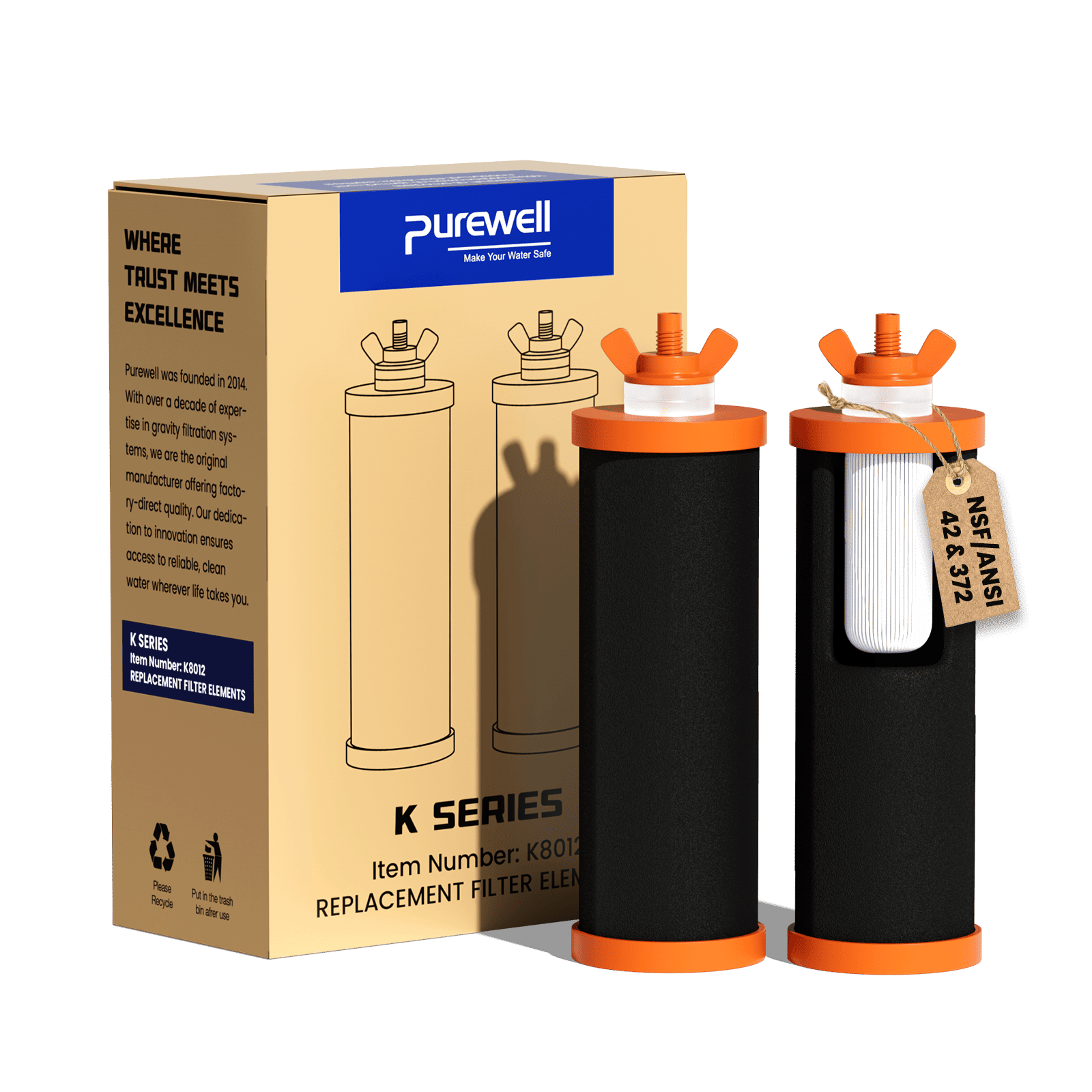
The current K Series descriptions list activated carbon, silver ion and a hollow-fiber UF membrane in the advanced filter option. They also list separate fluoride-reduction and pH-raising options. Select the exact option for your intended use.

Read beyond the micron number
Purewell lists a 0.01 μm pore size for these K Series filters. That specification alone does not establish removal of every contaminant, nor does it replace a performance report.
For fluoride or PFAS, match the claimed reduction to the exact cartridge and its supporting report. Do not transfer a claim between filter options.
Explore K Series filter options →Match the system and filter count
The 1.0-gallon K Series listing specifies one filter, while the 1.5- and 2.25-gallon listings specify two. Use the product’s matching replacement instructions; similar-looking filters are not proof of compatibility.
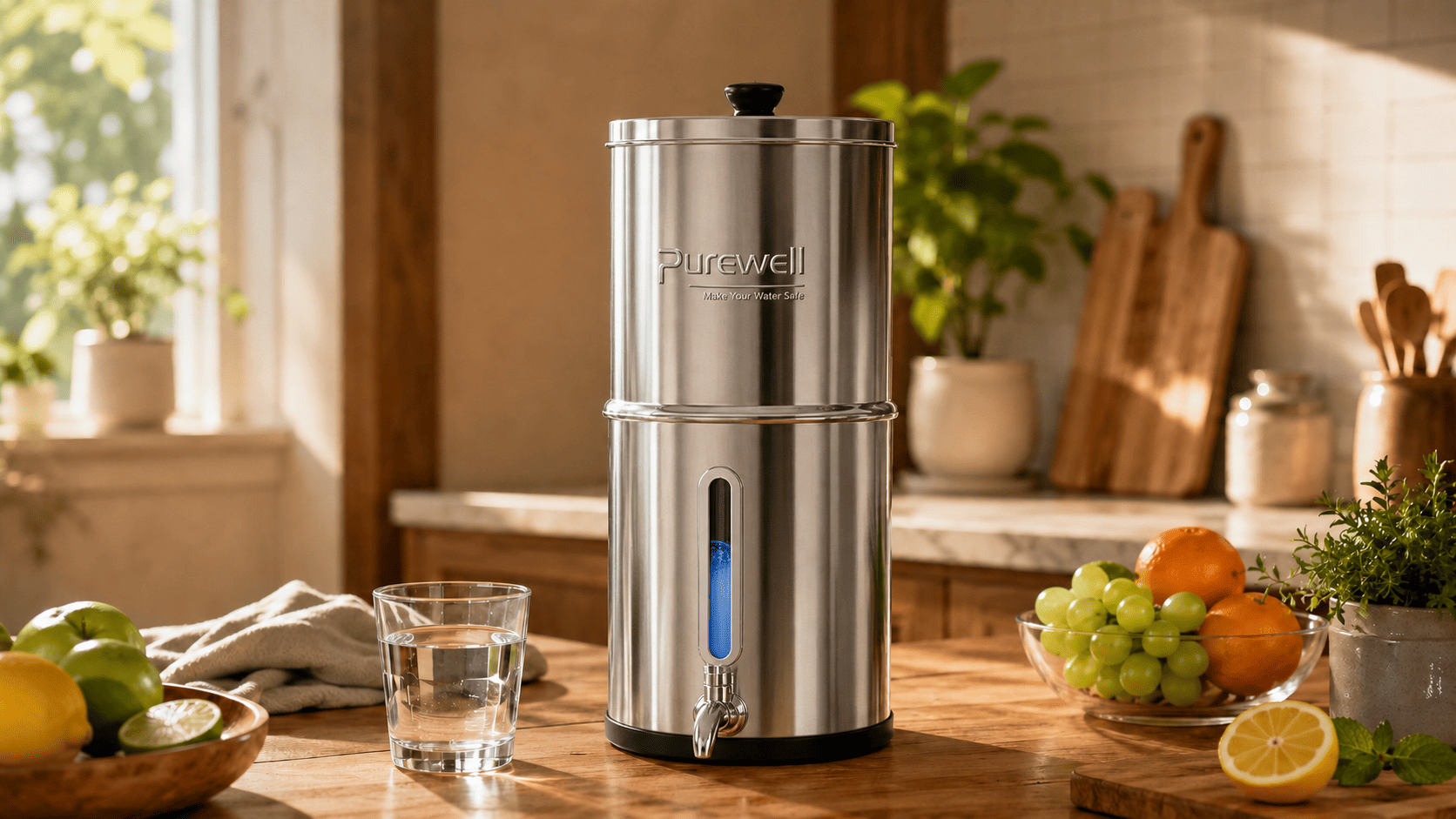
The viewing window helps you see the stored water level. It is not a display of contaminant removal or proof of water quality.
Gravity filtration, RO or an electric dispenser?
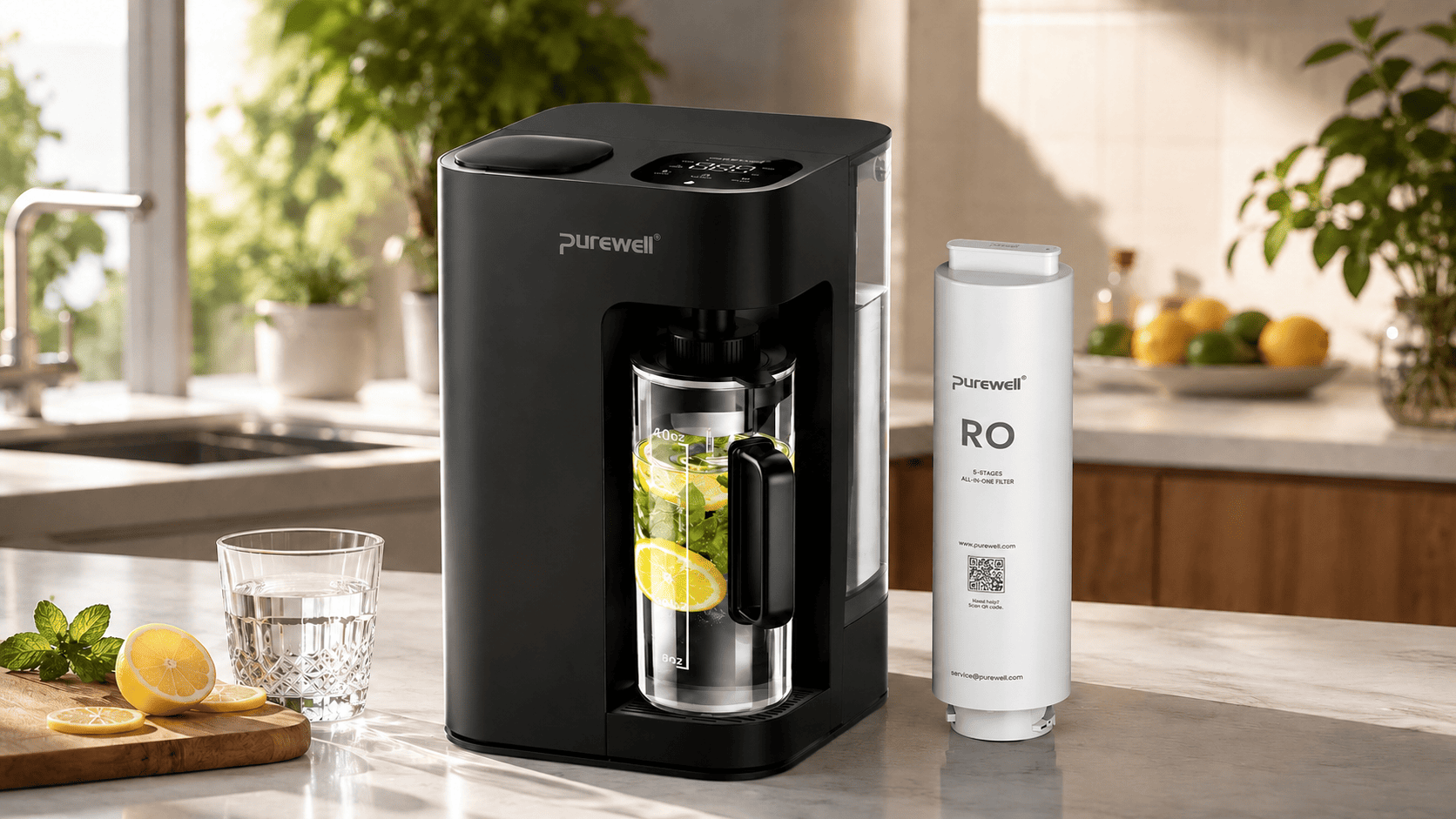
These terms describe different things. Gravity describes how water moves; reverse osmosis describes a treatment process; an electric dispenser may add pumping, heating or cooling. Compare the actual treatment technology inside each product.
- Consider manual gravity when you want a refillable countertop format and the selected filter’s documented capabilities meet your needs.
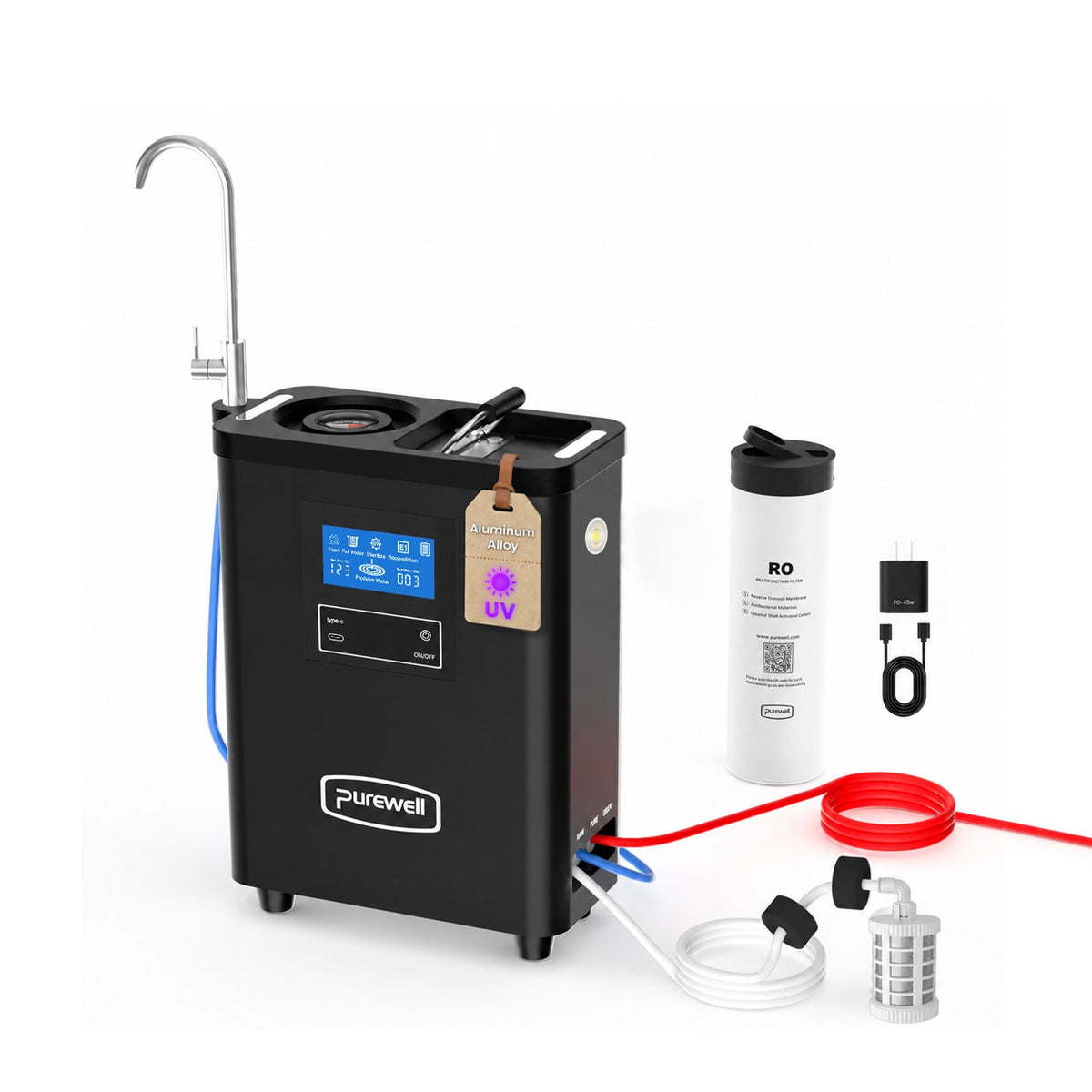
- Compare reverse osmosis when reducing dissolved substances is a priority. Check the exact unit’s installation needs, power use and reject-water handling.
- Compare powered dispensers when temperature control or dispensing convenience is important. Those features do not by themselves establish filtration performance.
A power-free design is useful during an outage, but it does not make every water source suitable. Follow drinking-water advisories and the filter manufacturer’s limitations for unknown or untreated water.
Make maintenance part of your choice
Watch the video guide
Follow the priming and flushing instructions for the cartridge supplied with your system.
Record installation date and usage. Follow the manual for cleaning the chambers, tap and filter.
Check rated capacity and replacement guidance. Do not rely on one calendar rule for every filter.

Flow slowing down?
Review the priming, cleaning and replacement instructions. Purewell’s product descriptions advise replacement when rated capacity is reached, taste changes or flow becomes slower.
Use cold or room-temperature water within the listed temperature range. Source-water quality and usage can affect service life.
Find matching replacements →Gravity water filter FAQ
How do the leading gravity water filter systems compare?
The right fit depends on your water concerns, the evidence for the exact filter, available counter space, and replacement costs. Use the model comparison as a shortlist, then check each filter’s documentation. This is a Purewell-authored buying guide, not an independent laboratory ranking.
Do gravity water filters remove fluoride or PFAS?
Do not assume every filter does. Purewell lists a dedicated fluoride-reduction option in its K Series. For fluoride or PFAS, check the exact cartridge’s performance report, tested capacity and conditions; a claim for one option does not apply to the entire range.
Will a Purewell K Series filter lower TDS?
No. The K Series product descriptions state that these filters are not designed to reduce total dissolved solids. Choose a treatment system designed for your specific dissolved-contaminant concern if that is your goal.
Is a water-level window a sign that the water is safe?
No. It shows the amount of water in the lower chamber. Water clarity and the visible water level do not verify contaminant reduction.
How often should I replace the filters?
Follow the instructions for your exact filter. Purewell advises replacement when rated capacity is reached, taste changes, or flow becomes slower. Source-water quality and usage affect service life, so a universal six-month rule is not appropriate for every model.
Can I use gravity filtration during a power outage?
A manual gravity system does not need electricity to move water through its filters. Its suitability still depends on the source water and filter limitations. Follow local drinking-water advisories; do not assume an everyday countertop filter makes unknown water safe.
Find your everyday gravity system.
Choose your capacity, review the filter options, and check the complete configuration before ordering.
Explore Purewell K Series →Sources & methodology
This guide uses official manufacturer product descriptions reviewed on September 10, 2026. It does not report independent product testing. The Purewell offer and service information above was confirmed by the store on September 11, 2026. Competitor prices and availability can change.
The table links to each manufacturer’s model page. Purewell capacity, dimensions, filter-count and maintenance details come from its 1.0-gallon, 1.5-gallon and 2.25-gallon K Series listings. Read the exact filter’s performance documentation before relying on a contaminant-reduction claim.